For businesses, a virtual info room is usually an essential instrument for controlling and in safety sharing secret documents. Whilst all enterprise data is normally sensitive enough to demand a more specialized method of safe-keeping and posting than email, Google Travel, or Dropbox, many types of business documentation like financial data, IP, litigation documents, etc . are highly secret and can present significant risk any time leaked. To stop this, corporations need a software platform that could rival the hazards of dripping these https://dataroomzone.net/7-common-questions-about-virtual-data-rooms-and-the-answers/ critical records. VDRs provide an array
Author Archives: Industrial Intelligence
Digital Data Room FAQ

Published in Modern Metals Tuesday | 15 August, 2017
By Corinna Petry
Startup assists OEMs, end users and fabricators in managing their productivity using targeted, real-time information
August 2017 – IT departments tend to get excited about technology developments, but it’s sometimes a hard sell both in the C-suite and on the production line. Executives and managers worry they’ll spend too many hours improving processes that their team might not adapt to, or even that employees might detest an intrusion in how they do things.

“Companies want to understand what stops a line and how that impacts each and every other process on the floor.
On the other hand, what many companies have begun to realize is that minute bits of data have value, and if you could gather, analyze and employ the knowledge gained from that data—to create quality scheduling, to even out workflows and significantly benefit the bottom line, why not pursue the opportunity?
Industrial Intelligence, co-founded by Steve Leebow, Darren Tessitore and Brent Hill, started up in January 2017 in Kennesaw, Georgia. The end-to-end smart manufacturing solution Industrial Intelligence designed is already proving to be of great value to Pacesetter Steel’s three service centers in Atlanta, Chicago and Houston, according to CEO Aviva Leebow Wolmer and Vice President of Operations Tyler Grahovec.
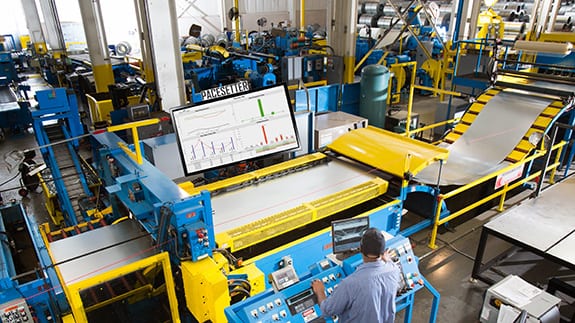
Smart manufacturing is as much about connecting people with real-time intel as it is about networking machinery.
But first, what is smart manufacturing? Industrial Intelligence COO Tessitore explains that his firm goes into factories to conduct “a detailed assessment, looking for key data points that aren’t being utilized, and we design a solution to gather and analyze those data points.”
Say you are making widgets and you do not have a grasp of actual downtime on a particular manufacturing line. “We connect to the machine and tell you when it is and when it is not running, and provide analytic information as well as the reasons why the line is not up and running.”
Information connection
In another scenario, “your coils or pallets aren’t at the manufacturing line. Now you can let the key people in the factory know what’s happening in real time and why it’s happening.” It is very uncommon, says Tessitore, that manufacturing companies, fabricators and OEMs know how to gather this information. By using smart manufacturing, “we reach out to people, processes and machines and create data connectivity.” Industrial Intelligence will select key points along the production chain, assess the information and provide visibility of this information in displays, graphs and reports. In addition, the firm will create real-time alerts of what’s happening, and prompt operators, plant managers, heads of manufacturing, and other executives to take actions to improve productivity.
“Our solutions utilize hardware and software. The hardware connects to machines and pulls data. We connect to most machines through programmable logic controllers (PLC).” The software will sift through actual data to allow analytics to compare different data points and provide actionable intelligence, says Tessitore.
Any tablet or smart phone can view dashboards and reports. The software helps users to “understand and correlate data which for example can be used to create predictive maintenance alerts,” he says.
End to end
“What makes us different is we are not just a software platform,” Tessitore says. “A lot of customers don’t have the expertise of where to begin.” The process appears to be confusing, time consuming and expensive. Industrial Intelligence has created a solution that is not confusing, is not time consuming and is relatively inexpensive and easy to implement, the co-founders say.
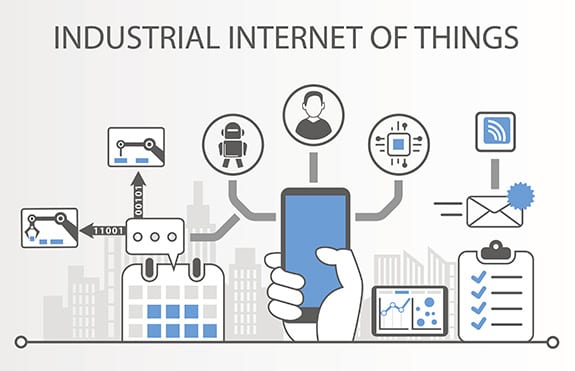
Bottom line, says Tessitore, is that “we want to make manufacturing more productive, efficient and profitable by bringing it up to speed with technology known as IIoT (Industrial Internet of Things).”
Getting a report, a day after a downtime event happens is not productive. But, “if the plant manager can be alerted by text message that Line X has been down for 30 minutes, and he can discover in real time what the problem is, he can take action. IIoT allows us to alert anyone at any time of anything we want, giving management true actionable intelligence.”
One significant feature within the solution is how to automatically track downtime without manual entry. “Using IIoT technology, we are able to provide [the necessary information] and evaluate the reason that downtime has occurred,” says Tessitore.
The trick is how to present the data and make it useful to operators at the line level. The guy at the line needs one view; the floor manager needs another. As you roll up the company, you need to have different ‘looks’.
Root causes
Wolmer says she brought this project to Pacesetter because “we wanted to find out where we had operating inefficiencies and the reason for those inefficiencies. We wanted to understand where we were stopping manufacturing lines and the root causes.” She credits the operations vice president and plant manager with working with the Industrial Intelligence team to pilot the solution.
The main benefit, says Wolmer, is that “we learned the different reasons for downtime, found the things that were causing problem ,and started working on solutions. We reorganized some processes based on the data analysis. We are able to do more with less and this has been effective in helping us service our customers. It is making us better at providing the ultimate customer experience.”
Implementation
Grahovec says the process of collecting and interpreting data began long before 2017. It started with Pacesetter’s enterprise resource planning (ERP) software. Over time, “We took different business problems and tied in sensors with our ERP. We designed first-generation dashboards to understand how our equipment is performing generally.
“We have tons of data out there,” he says. “You can pull data from almost anything. The trick is how to present the data and make it useful to operators at the line level. The guy at the line needs one view; the floor manager needs another. As you roll up the company, you need to have different ‘looks’. The line level must know what’s going on instantly. But the managers must study the information historically—for the week, month, quarter and year, and focus on attacking the low-hanging fruit.”
Basically, the company needs to understand what’s stopping a multimillion-dollar production line from working efficiently and how that integrates with each and every other process. Before implementing this solution, Grahovec and his team received a spreadsheet of information from the day before. “But we didn’t have a handle on what we were had accomplished. We wanted real-time data to fix things faster. Due to the smart manufacturing solution, Industrial Intelligence has streamlined our operations. The next step is to have them integrate predictive maintenance tools.”
Spreading the word
Now, Pacesetter is using tablets for key personnel to make sure everyone is connected and, says Grahovec, “the reports sent to the tablets will be customized for each user.”
He feels that using Industrial Intelligence’s solutions, the company will reduce many waste producing activities, such as paperwork and unnecessary movement of people and materials.
Wolmer says she believes “this technology is great for us and for manufacturers in many different industries We will use Industrial Intelligence to bring [the resource] to some of our customers’ facilities.” MM
DO YOU FULLY UNDERSTAND YOUR DOWNTIME?
It’s not as difficult as you think, when you have the right partner. Download a free brochure NOW, so you can start understanding downtime in your facility.
SOURCES

Drug-Free World Hero Award
Foundation for a Drug Free World The Americas Chapter (www.drugfreeworld.org and www.drugfreeworldamericas.org) held its 10th Anniversary Drug Free Hero Awards Gala in honor of the #UNODC International Day Against Drug Abuse. Held on June 1 at Leonard’s Palazzo in Great Neck, NY, the gala honored 29 local, national and international leaders with the 2017 Drug Free Hero Award, including those from the United Nations, Law Enforcement, Regional Directors of Drug Free World, Celebrities, Artists, Government Officials, Latin American Officials and others. Keynote Speakers included Senator Avella, US Drug Enforcement Administration NY Division Executive Director,
IDENTIFYING THE IMMEDIATE ROI IN THE INDUSTRIAL IOT
Recently published in Industry Today Manufacturers seek quantifiable ROI before making leap to IIoT implementation By now, most manufacturers have heard of the promise of the Industrial Internet of Things (IIoT). In this bold new future of manufacturing, newly installed sensors will collect previously unavailable data on equipment, parts, inventory and even personnel that will then be shared with existing systems in an interconnected “smart” system where machines learn from other machines and executives can analyze reports based on the accumulated data. By doing so, manufacturers can stamp out inefficiencies,

Never Miss a Beat with Predictive Maintenance
Predictive maintenance is the idea of fixing something before it breaks, which can save you LOTS of time and money! “Don’t Fix It If It Ain’t Broke.” Horrible advice, especially if you run a manufacturing plant. Any industrial business should really be focusing on predictive maintenance. Predictive maintenance is the idea of fixing something before it breaks. It saves businesses time, money and a lot of frustration. So What Exactly Is Predictive Maintenance? Predictive maintenance works by using a number of tools and techniques to monitor the condition of your machines and
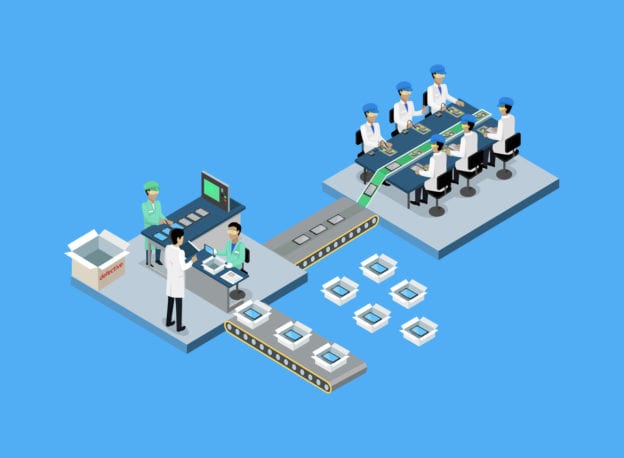
Smart Manufacturing Systems you Need
Smart manufacturing systems are designed to make your job easier and keep your business moving. Read on for 4 smart manufacturing systems you have to try. Smart manufacturing is being hailed as the next industrial revolution. With these sort of claims, it would be ridiculous to not want to check it out. Where do you start? For someone who is just stepping into smart manufacturing, what tools should they use? There’s no easy answer. Your business is unique, so the tools your business uses should also be unique. There are
The Time has come to add IIoT into your Manufacturing Business
The Industrial Internet of Things (IIoT) is a breakthrough in making your entire manufacturing plant work together seamlessly. Industrial Intelligence knows how: we’re here to help your business be a success. Here’s how to implement IIoT. The industrial world is finally beginning to join the 21st century, and it all has to do with the IIoT. An increase of 28.5% in revenues has been seen by manufacturers using IIoT. By 2025 it’s estimated that the economic impact of IIOT will be $6.2 trillion. So what is the IIoT?

Intelligent Manufacturing Rockets Business Growth
Intelligent manufacturing solutions are a smart way to make things work better and therefore help your business grow. Check out our guide on what they do. How important are Intelligent Manufacturing Solutions to the health of your company? Take it from GE Chairman and CEO, Jeff Immelt. He says, “Industrial companies need to become digital to survive.” “We must turn information into insights and insights into outcomes.” But for today’s manufacturing professionals it can be difficult to access the benefits. Transitioning to Intelligent Manufacturing can be intimidating. And even more
State of Initiative Report on Digital Transformation
An email survey was done of a broad swath of industrial concerns and a trend analysis completed. The survey benchmarked the evolving landscape of digital transformation, which we define as the adoption of new manufacturing and business processes made possible by new automation, communications and computing technologies. These are represented by conceptual models such as data analytics, the Industrial Internet of Things (IIoT) and Industry 4.0. In the past 3 years of surveys, the number of respondents who believe digital technology will have a “high” or “critical” impact has increased
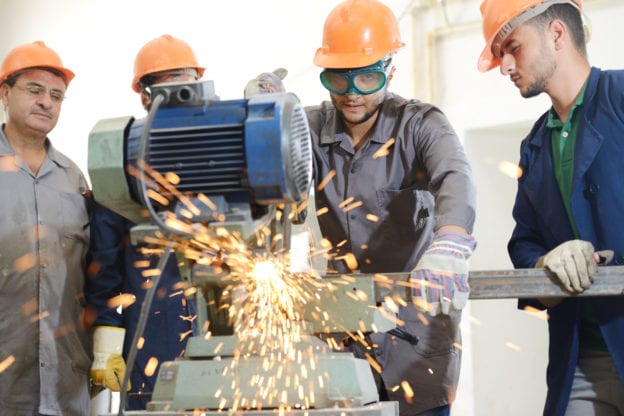
6 Trends in Smart Manufacturing (Industry 4.0)
The smart manufacturing (Industry 4.0) uses information technology and the best operating technologies to enhance global manufacturing. It aims at giving manufacturing companies quicker production and improved worker safety to bring more competition in market place. To remain economically viable, manufacturers must accelerate their manufacturing cycles. Smart manufacturing gives intelligent manufacturing solutions by focusing on cost reduction and efficiency. Let me walk you through the 6 trends in smart manufacturing industry; 1. Big data and cloud computing Through cloud computing, manufacturers are able to transfer data from one point to